Select region / language
CHINA
NA
LAC
Trina Storage to Debut Elementa 3 Flex Utility-Scale Battery System at PV EXPO 2026
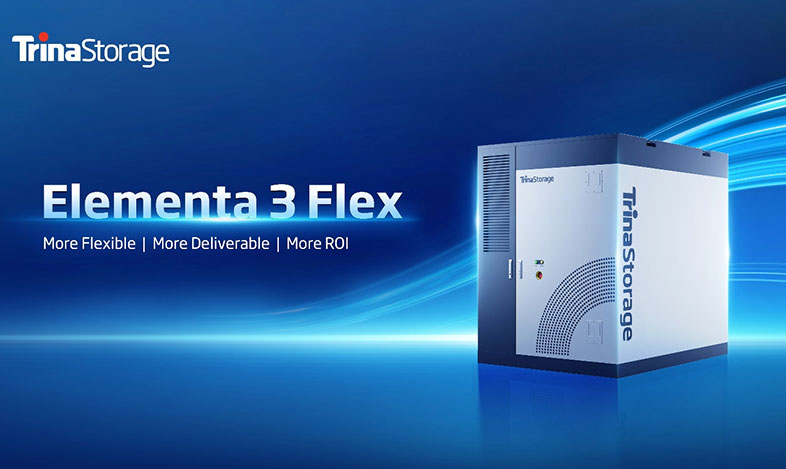
Global energy technology leader Trina Storage, a division of Trinasolar, will debut the Elementa 3 Flex, a compact utility-scale battery energy storage system engineered for Japan's transportation and site constraints at PV EXPO 2026 from March 17 to March 19, 2026.
Making its global debut at the exhibition, the Elementa 3 Flex was developed to address several practical challenges facing renewable energy projects in Japan, including transportation weight restrictions, mountainous terrain, and limited installation space. Alongside this launch, Trina Storage will also introduce the Elementa 3, its flagship high-capacity utility-scale energy storage system, to the Japanese market for the first time.
Trina Storage's Tailor-Made Solutions for the Japanese Market
Trina Storage is a global energy storage manufacturer providing utility-scale battery energy storage systems designed for renewable integration and grid applications, including its in-house manufactured battery cells. The company has deployed more than 20 GWh of storage capacity globally by the end of 2025, including large-scale industrial battery storage systems in Gunma Prefecture, Japan.
For its operations in Japan, Trina Storage has established a dedicated local team that provides comprehensive support, ranging from project development assistance and technical consultation to after-sales service.
By addressing the unique challenges of the Japanese market with appropriate solutions, Trina Storage has been able to develop tailor-made solutions optimized for local project requirements.
Elementa 3 Flex - World Premiere
Elementa 3 Flex is a highly versatile system with 1.56 MWh capacity, built on Trina Storage's proprietary 3.2V, 587Ah lithium iron phosphate (LFP) cells manufactured in-house.
Its most distinctive feature is that it was specifically developed to address several challenges unique to the Japanese market:
Newly Introduced Products
Japan Debut
Elementa 3 – Trina Storage's Flagship Model with Ultra-Large Capacity and High Energy Density
Trina Storage will also showcase the Elementa 3, its flagship utility-scale battery energy storage system, which is being introduced in Japan for the first time at PV EXPO. It delivers a maximum capacity of 6.25 MWh in a single container, combining high energy density with Trina Storage's 587Ah cells.
Through an optimized design, the system improves module energy density by approximately 12.3% and site-level energy density by approximately 24.7% compared with the previous generation, contributing to lower levelised cost of storage (LCOS) for large-scale energy storage deployments.
The Elementa 3 platform also received the 2025 French Design Award, recognising its integration of industrial design and system performance.



Customer Service Hotline
1300 874 627