Select region / language
CHINA
NA
LAC
Trinasolar Powers Solar and Storage Project in Phu Quoc, Supporting Vietnam’s Growing Energy Storage Market
Phu Quoc, Vietnam – 18, August 2026 – Trinasolar, a global leader in smart PV and energy storage solutions, has supplied a 3MWp solar PV system using its Vertex N 725W (NEG21C.20) modules, together with a 10MWh Trina Storage Elementa 2 battery energy storage system (BESS) for Corona Resort in Phu Quoc, Vietnam.
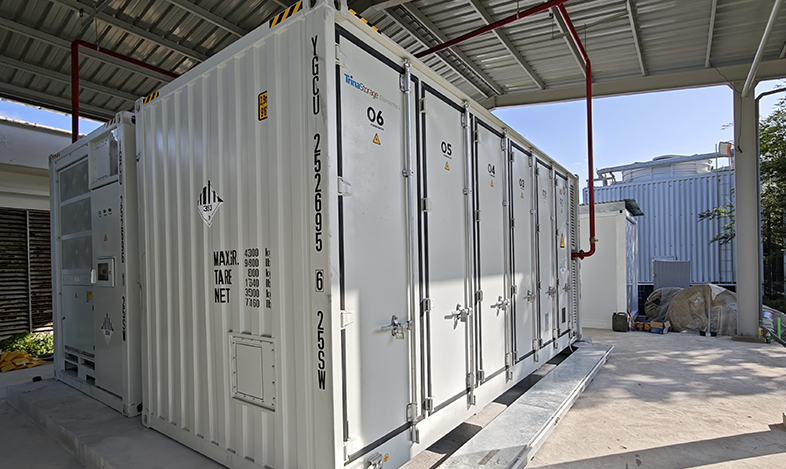
The project is developed by Nam Viet Green Energy JSC. Nam Viet is one of Vietnam’s leading renewable energy companies, specializing in the development, investment, design, engineering, procurement, construction, and installation of renewable energy systems. The project is expected to be connected to the grid and begin commercial operations in mid-September.
The project comes as Vietnam faces growing electricity demand and an increasing need to improve the flexibility and resilience of its power system. Vietnam aims to develop 10,000–16,300 MW of battery energy storage system (BESS) capacity by 2030, equivalent to approximately 5.5–6.9% of the country’s total power capacity, reflecting the growing role of BESS in integrating renewable energy, managing fluctuations in power generation and strengthening energy security.
The development is particularly relevant to Phu Quoc, one of Vietnam’s leading tourism destinations, where the continued expansion of hospitality, entertainment and tourism infrastructure is driving increasing demand for reliable electricity. As one of Vietnam’s largest integrated resort destinations, Corona Resort faces significant and growing energy demand across its tourism, hospitality and entertainment operations. The solar-plus-storage solution helps address these energy needs by increasing the utilization of renewable power, improving energy flexibility and strengthening the resilience of its power supply.
The project initially had 5.5 MWp of modules installed, with the 3MWp n-type i-TOPCon Vertex N modules and 10MWh AC-coupled Trina Storage Elementa 2 added later, demonstrating how existing solar assets can be expanded with BESS to help strengthen the resilience of local power supply.
By combining daytime solar generation with greater energy flexibility provided by energy storage, commercial and industrial users can improve energy cost management and create additional commercial value. The integrated PV+BESS system enables greater utilization of onsite solar generation, reduces peak electricity demand, enhances energy resilience, and improves overall operating efficiency.
“This project demonstrates how advanced PV and battery storage technologies can be successfully integrated into a large-scale commercial facility in Vietnam,” said a representative from Nam Viet Green Energy JSC. “Trinasolar went beyond its role as a technology supplier, drawing on its expertise across PV and energy storage to advise on the BESS configuration and operating approach. This helped us develop a solution aligned with the project’s technical and commercial requirements.”
The Phu Quoc project also highlights an emerging opportunity in Vietnam’s renewable energy market: using energy storage to unlock greater value from existing solar investments, rather than focusing solely on adding new generation capacity.
“Enhancing existing solar assets with energy storage is one of the emerging pathways in Vietnam’s renewable energy market,” said Elva Wang, Group Director of Southeast, South and Central Asia, Trinasolar Asia Pacific. “These projects can present challenges from early-stage system planning to integration and delivery, making close collaboration between technology providers, EPCs and customers essential. By bringing PV and BESS together through bankable products, system-level understanding and regional execution experience, Trinasolar is helping partners in Vietnam develop PV+BESS projects for both generation and flexibility.”
As Vietnam moves toward a more flexible and resilient power system, projects such as the Phu Quoc installation demonstrate how solar-plus-storage can support the country’s growing commercial and industrial energy needs while accelerating the transition toward a more sustainable energy future.



Customer Service Hotline
+65 6808 1111