Select region / language
CHINA
NA
LAC
How Solar Panel Durability Protects Projects in Extreme Climates
From typhoons in Philippines to hailstorms in Australia and snowstorms in Japan, the Asia Pacific is exposed to some of the world’s harshest conditions. Each climate event is a hit to insurance, BOS costs, and project bankability.
Hence, strong solar module durability is a prerequisite for protecting yield and giving lenders confidence of reliable performance for decades.
While solar modules themselves don’t spontaneously ignite, high heat can degrade components, increase arc faults, and escalate fire risk.
Key Impacts of Extreme Heat on Solar Modules:
Fires mean downtime, lost yield, and damage to assets and wellbeing. Tier 1 solar module manufacturers like Trinasolar reduce fire risk with:
Cold snaps, snow drifts, and hailstones can hit solar modules where it hurts:
GCube reports hail accounts for only 1.4% of PV claims—but more than 50% of payouts, averaging US$58M per claim.
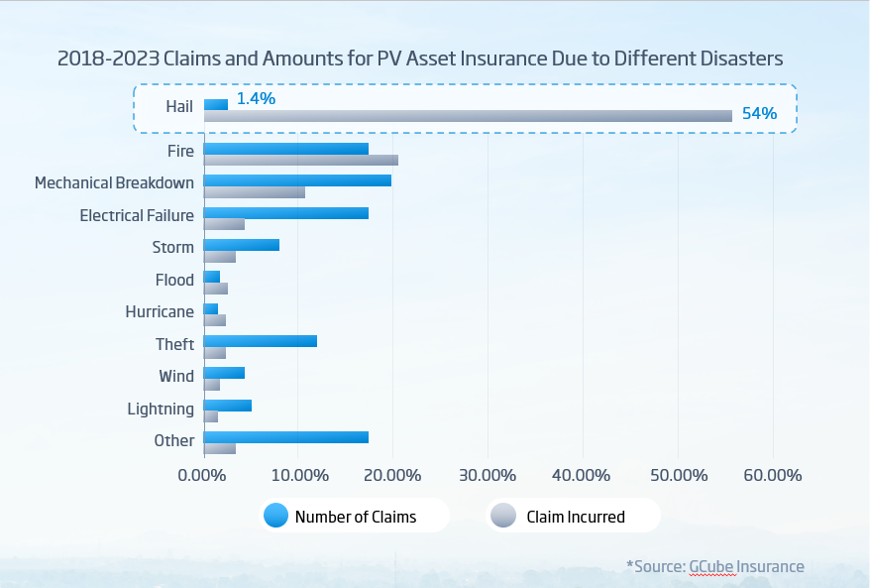
Hail incurs the highest costs for PV asset insurance payouts despite accounting for only 1.4% of all claims (Data source: GCube Insurance).
Trinasolar and other leading solar module manufacturers mitigate these stressors with:
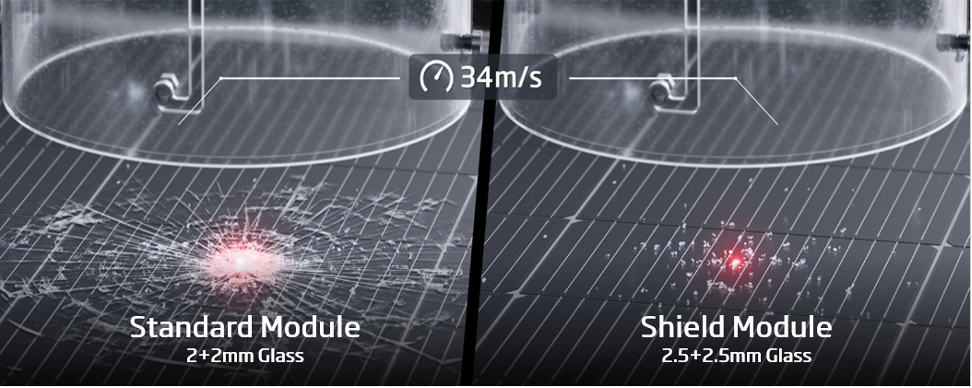
Trinasolar’s Shield module withstands hailstone damage by increasing glass thickness.
Strong winds don’t just bend frames; they rip solar modules and mounting systems loose, scatter debris, and drive costly repairs.
Solar modules in high wind speed zones must be built and verified to withstand high wind loads. In Asia Pacific, one of the most hurricane-prone zones in the world, mitigation strategies are especially crucial. Modifications include:
For instance, Trinasolar’s Shield solution (module and tracker) incorporates innovative dual fastening and triple-beam installation design to increase wind pressure tolerance to +8000Pa/-6000Pa, as certified by TÜV Rheinland.
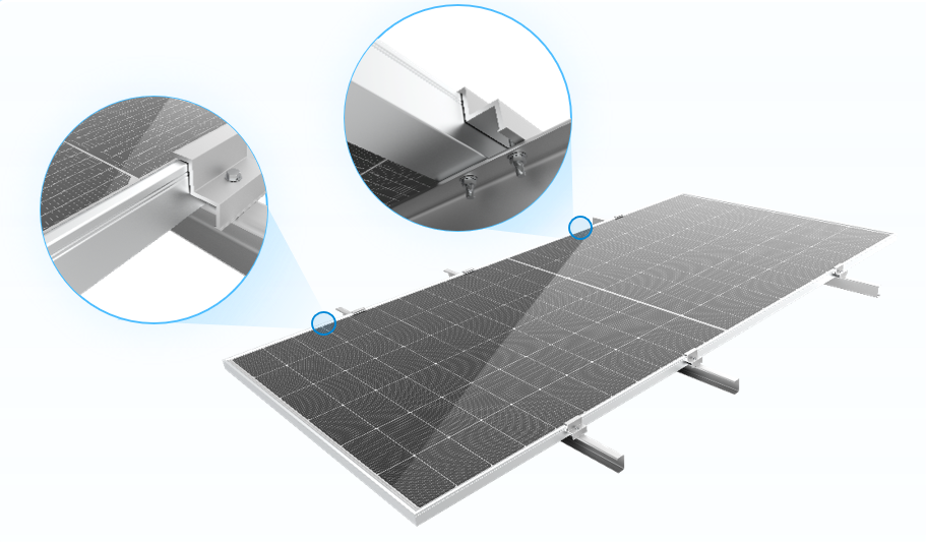
Dual-fastening and triple-beam installation provide strong wind resistance for Trinasolar’s Shield module.
Yes, when engineered for real-world conditions. Modern solar panels from Tier 1 manufacturers undergo extensive testing for:
For instance, according to the Renewable Energy Test Center (RETC)’s 2024 PV Module Index Report, the Vertex N Shield modules excelled in Heat Deflection Temperature (HDT), which exposes modules to 55-mm diameter freezer iceball impacts, followed by 50 thermal cycles and hot-spot endurance testing. Other certifications include:
These validations ensure panels will consistently deliver power—even 20–30 years after installation.
Every layer of durability translates into real savings:
Simulations show that:
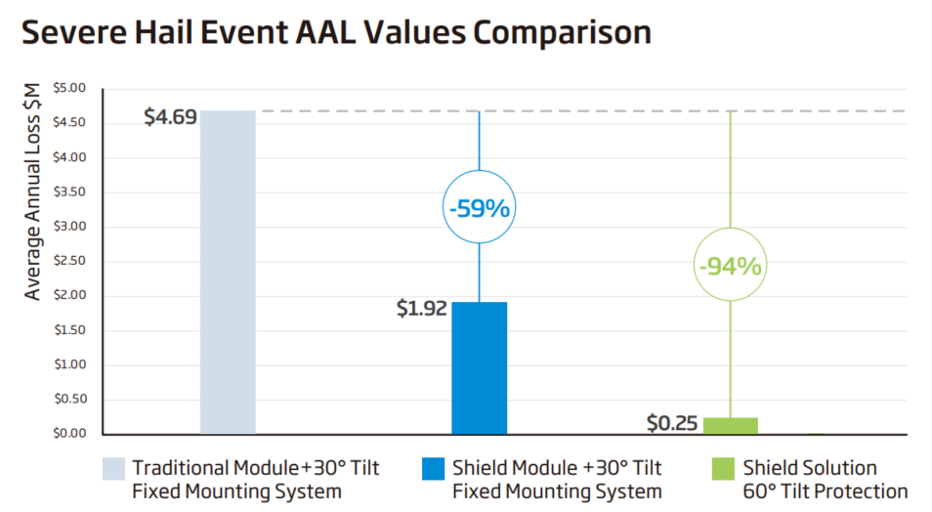
In hailstorms, Trinasolar’s Shield module, designed for extreme climate conditions, cuts losses significantly compared to traditional modules.
Developers win when financiers trust that modules won’t fail halfway through the debt term. In high-risk climate zones, modules proven in harsh climates directly unlock lower costs, smoother insurance underwriting, and financed projects.
Ready to make your next project resilient from day one?



Customer Service Hotline
+65 6808 1111